



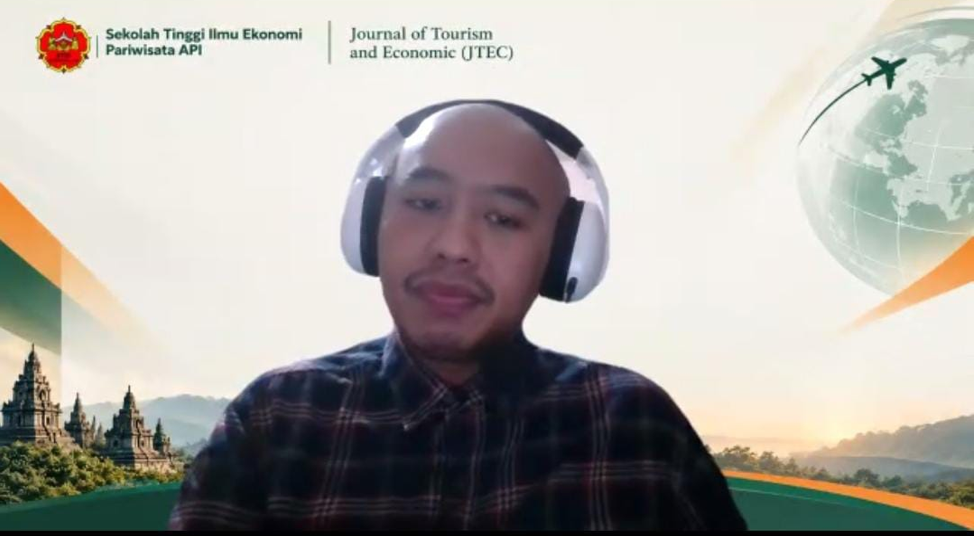
North Jakarta, October 2, 2026 — The webinar themed “From Preference to Practice: Sustainable Tourism Across Global and Local Contexts” was held as a forum to broaden students’ insights regarding the implementation of sustainable tourism, both in global and local contexts. This activity presented academic presentations regarding tourist preferences for sustainable destinations and community-based tourism development practices. Located at Bunda Mulia University, Ancol. The activity began with an introduction and a presentation of the webinar rules by the moderator. Next, participants received an introduction to the Journal of Tourism and Economics before the event officially opened with an introduction to the theme and objectives of the webinar.
Tourist Preferences for Sustainable Tourism:
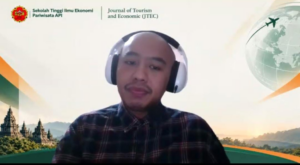
The first session featured Mr. Tutur Wicaksono, Ph.D., who presented material on what tourists expect from sustainable destinations. In his presentation, various sustainable tourism efforts and tourist preferences regarding their implementation were discussed. The research presented involved 250 respondents who assessed 14 sustainable tourism practices. Various aspects were then analyzed to determine how tourists perceived these efforts. The results showed that environmental protection, wildlife-friendly tourism, and waste reduction were among the aspects that received significant attention from tourists. The better these efforts were implemented by destination managers, the higher the level of tourist satisfaction. Furthermore, providing environmentally friendly food and preserving cultural heritage can also add value to the experience of tourists, both local and international. Meanwhile, fair trade aspects showed a relatively different level of attention compared to environmental and wildlife aspects. Based on these findings, destination managers have several important steps to implement. To avoid tourist disappointment, destinations need to pay attention to environmental and wildlife protection, as well as waste management. Meanwhile, increasing the role and involvement of local communities can be one way to improve tourist satisfaction.
Sustainable Tourism Practices in a Local Context:
The next session featured Ms. Saskia Salsabila Rizkiyani, STRPAR, who discussed the profile and natural potential of Gunungsari Village and the implementation of sustainable tourism in a local context. The presentation addressed the issue of economic growth and environmental preservation, which have not yet been balanced. In this context, Gunungsari Village serves as an example of how tourism development can be directed toward more sustainable practices. One of the changes discussed was the transition from nature tourism to agrotourism, involving the community, particularly farming communities, as part of destination development. This potential is also supported by independent organic farming practices in Gunung Putri. However, several challenges remain in its implementation. The three main obstacles identified are waste management, human resource (HR) capacity, and administration. To address these obstacles, several recommendations can be implemented, namely strengthening the role of Village-Owned Enterprises (BUMDes), building partnerships, packaging daily community activities as part of the tourism experience, and providing training to all residents. This approach demonstrates that tourism sustainability depends not only on destination management but also requires active community involvement.
Discussion and Q&A:
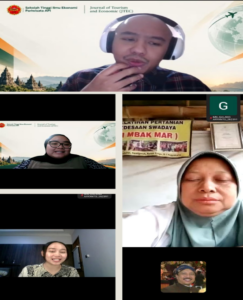
After the two presentation sessions concluded, the webinar continued with a discussion and Q&A session. Participants were given the opportunity to submit questions, provide feedback, and discuss various issues related to sustainable tourism. Mr. Tutur Wicaksono, Ph.D., and Ms. Saskia Salsabila Rizkiyani, STRPAR, responded to various questions raised by participants. The discussion was interactive and expanded the discussion on the relationship between tourist preferences, destination management, environmental conservation, and local community empowerment. Through the discussion session, participants gained an understanding that the concept of sustainable tourism does not stop at tourist preferences, but needs to be realized through concrete practices that can be implemented at the destination level.
Closing:
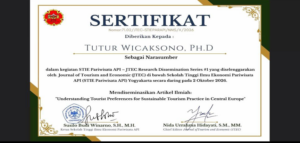
The webinar “From Preference to Practice: Sustainable Tourism Across Global and Local Contexts” provided perspectives on the importance of connecting tourist expectations with concrete practices in sustainable tourism development. From the global context through a study of tourist preferences to the local context through the development of Gunungsari Village, this activity demonstrated the importance of balancing economic, environmental, cultural, and community involvement aspects. The activity then concluded with the presentation of a certificate to Mr. Tutur Wicaksono, Ph.D. and Ms. Saskia Salsabila Rizkiyani, STRPAR as a form of appreciation for the contributions and presentations given in the webinar. Through this activity, students are expected to increasingly understand that the future of sustainable tourism requires a shift from mere “preference” to “practice,” so that the principles of sustainability can truly be applied in the management of tourism destinations in various contexts.