Tangerang, 8 Oktober 2025 – What if computers could actually understand human language?
This intriguing question opened the Community Service Program (PKM) held by the Department of Data Science and Artificial Intelligence, Universitas Bunda Mulia (UBM).
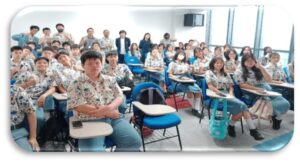
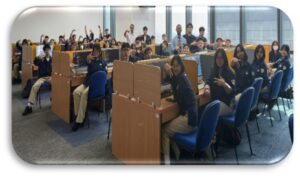
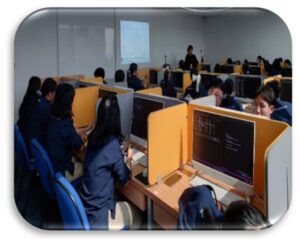
The three-day workshop, titled “Introduction to Natural Language Processing (NLP) for Grade X Students of SMK Atisa Dipamkara Lippo Karawaci Tangerang,” took place from September 24–26, 2025, at Lab Alpha, UBM Serpong Campus.
In this workshop, students were introduced to the world of Natural Language Processing (NLP) ; a technology that enables computers to understand, analyze, and even generate human language.
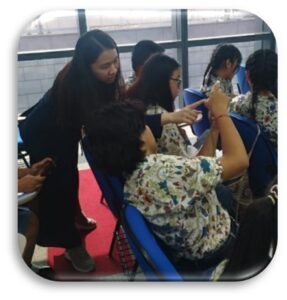
Although the topic sounds complex, the UBM team made it simple and engaging through hands-on activities that allowed participants to learn by doing.
Over the three sessions, students explored exciting topics such as:
- Text Classification & Summarization – how computers identify key content and create automatic summaries.
- Sentiment Analysis – how AI determines whether a comment is positive, negative, or neutral.
- Machine Translation & Keyword Extraction – how computers translate text and find important keywords.
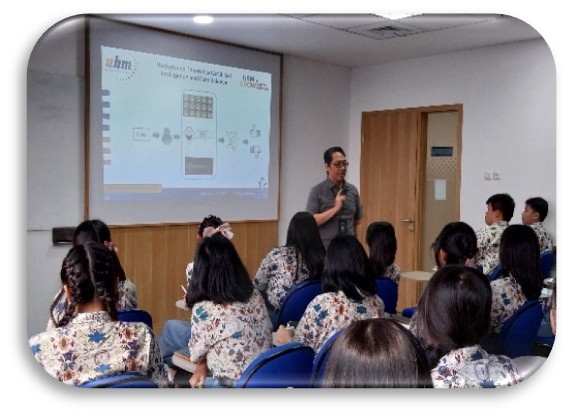
The workshop was led by Dr. Puguh Hiskiawan, S.Si., M.Si., Ph.D, supported by student facilitators Jason Jesse Joel Polii, Brilliant Hendrylie, Jean Christopher Allen, Virananda Iskandar, Marco Stefanus Indarwan, and Christofer Agatha Ho.
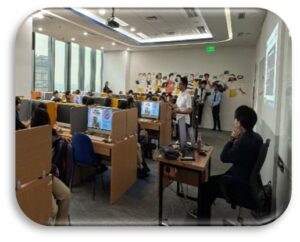
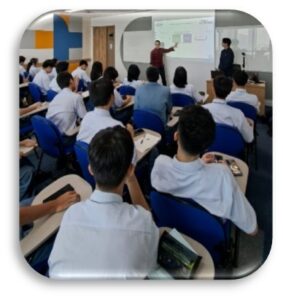
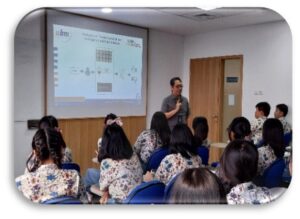
According to Dr. Puguh, the ability for computers to understand human language is one of the most fascinating challenges in artificial intelligence.
“For computers to understand us, humans also need to understand how computers think. NLP is not as complicated as it sounds ; it can be learned even at the high school level,” he explained..
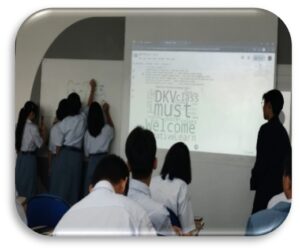
The students were highly enthusiastic, experimenting with simple text classification and sentiment analysis tools. Some even expressed new interest in pursuing studies in Data Science and Artificial Intelligence.
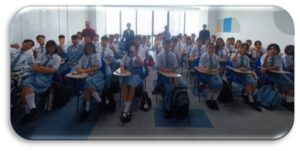
More than just sharing knowledge, this program aimed to spark young learners’ curiosity about the digital world.
With relatable and interactive learning, students discovered that AI is not something distant — it’s a gateway to future opportunities.
“It’s amazing that computers can actually ‘understand’ human language! Learning tech like this is so fun,” shared one of the participants excitedly.
The program reflects UBM’s commitment to strengthening collaboration between higher education and vocational schools, fostering technological literacy and 21st-century skills among Indonesia’s young generation.