



Strengthening Strategic Competencies, the Qualification 4 Banking Risk Management Training Program is Dynamic and Interactive
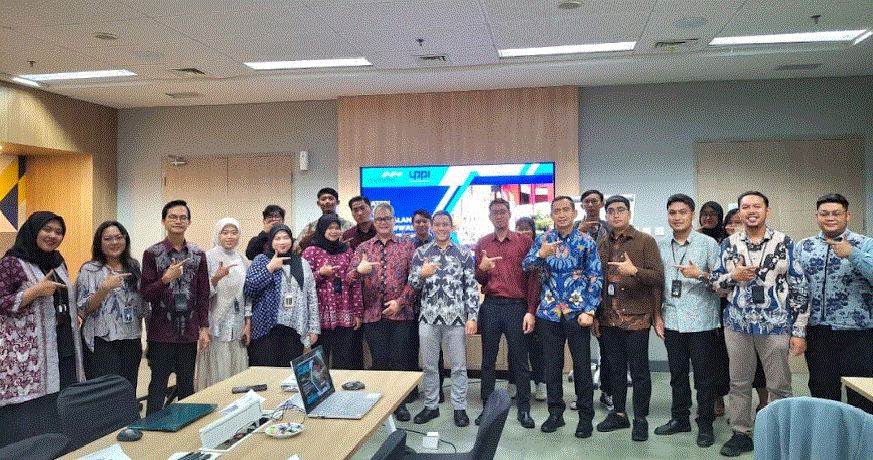
Jakarta, February 12, 2026 – The increasingly complex challenges of the banking industry demand human resources who are not only theoretically literate but also capable of making strategic, risk-based decisions. To address this need, the Qualification 4 Banking Risk Management Briefing Program was successfully held on February 11–12, 2026, in Classroom 309, Nawasena Campus, with 30 participants from the managerial level.
The two-day class was lively and enthusiastic. Participants taking the Banking Risk Management Certification Competency Test received comprehensive material, covering the banking risk management framework, the strategic role of risk management in corporate governance, and case studies reflecting real-world dynamics in the banking industry.
This program, which focuses not only on theory, is designed to encourage participants to think critically and analytically. In each discussion session, participants are encouraged to identify potential risks, analyze their impact on the organization, and formulate relevant mitigation measures. The interaction between instructors and participants creates a dynamic learning environment, where each participant’s practical experience enriches the discussion.
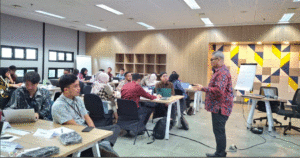
In this activity, Mr. Ferry N. Idroes delivered the material using a systematic, applicable, and easy-to-understand approach. His communicative delivery style and strong mastery of the material enabled participants to connect risk management concepts to decision-making practices in their respective work units. In addition to the presentation session, participants also participated in a mock exam as part of a strategy to improve their preparedness for the official certification exam.
The evaluation results showed very encouraging results. The program received an average rating of 3.91, categorized as “Very Good.” Participants assessed that the material presented was relevant to their needs, the learning process was effective, and the program’s service delivery supported the overall smooth running of activities. These achievements indicate that the program not only ran according to plan but also provided tangible benefits to the participants.
More than just exam preparation, this activity is part of an ongoing effort to build a strong risk culture in the workplace. By improving their understanding and managerial competency in risk management, it is hoped that participants will be able to play a more optimal role in ensuring that every policy and strategic decision comprehensively and prudently considers risk aspects.
Going forward, this training program is expected to continue to expand with more in-depth sessions and broader material enrichment, thereby addressing the dynamics of regulations and the ever-changing banking industry. This commitment to competency development is a crucial foundation for maintaining organizational stability, sustainability, and competitiveness amid increasingly complex challenges.