



Community Service: Through the “Warung Naik Kelas” Program, UBM, Alfamart, and Aksesmu Strengthen the Capabilities of Traditional Warungs
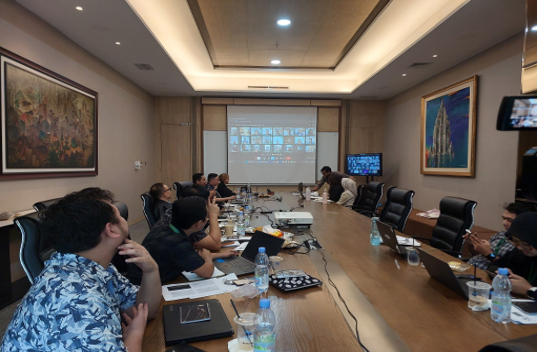
Jakarta, August 12, 2026 – Bunda Mulia University through its Community Service (PKM) activity collaborated with Alfamart and Aksesmu in the “Warung Naik Kelas” program. This activity is part of an effort to improve the capabilities of traditional stalls through targeted provision and mentoring according to the conditions of each stall.
This PKM activity was carried out by lecturers from the Management Study program, namely: Mrs. Dr. Siti Yasmina Zubaedah, BSIE, MSIE., and Mr. Alexander Robert, BA, M.Sc. , along with two students from the Management Study program who are members of the Excellent Community of Management (XCM), namely Sierryn Christabelle Panca and Febryana Larissa.
In this activity, Mrs. Dr. Siti Yasmina Zubaedah, BSIE, MSIE., and Mr. Alexander Robert, BA, M.Sc. , acted as resource persons who provided provisions to the Alfamart and Aksesmu teams regarding the management and development of stall businesses. The training provided is divided into two sessions and covers several main aspects, including basic bookkeeping for grocery stores and the methodology for developing and mentoring stalls.
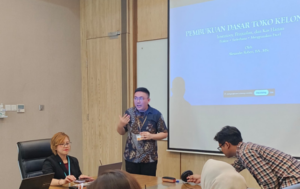
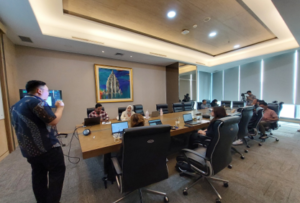
In the first session, Mr. Alexander Robert, BA, M.Sc. , presented on basic bookkeeping for a grocery store, emphasizing the importance of recording cash, sales, and inventory as the foundation for business financial management. Participants were also introduced to Excel templates to simplify the store’s financial records.
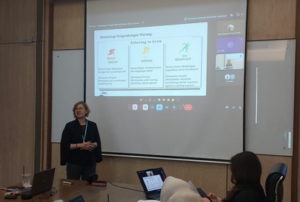
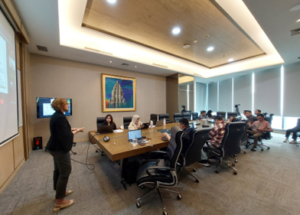
Next, in the second session, Dr. Siti Yasmina Zubaedah, BSIE, MSIE., provided a briefing on the methodology for developing stalls using the concept of “Ready, Set, Go.” The focus of the material in this session was understanding market characteristics, operations, supply chains, and the importance of building partnerships with suppliers as part of business development. The methodology provided is expected to help the Alfamart and Aksesmu teams provide more targeted and sustainable assistance according to the needs of each stall.
Through this collaboration, UBM together with Alfamart and Aksesmu strive to build an empowerment model that can help stalls gradually improve their business management capabilities, while strengthening the role of stalls as an important part of the distribution ecosystem and the community economy.