



The Role of Lecturers in Facing the Transformation of Higher Education, Industry, and the Economy in the Digital Era
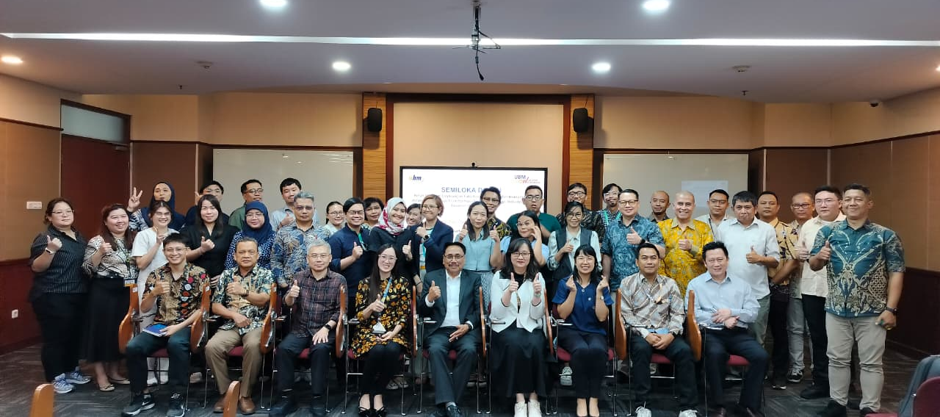
The Faculty of Social Sciences and Humanities held a seminar and workshop (semiloka) entitled “The Role of Lecturers within the Faculty of Social Sciences and Humanities in Addressing the Transformation of Higher Education, Industry, and the Economy in the Digital Era” on Thursday, October 8, 2026, at 2:00 p.m. Western Indonesian Time (WIB), at the Premiere Classroom. The event was attended by lecturers from the Faculty of Social Sciences and Humanities as part of the faculty’s efforts to enhance educators’ understanding and preparedness in responding to the evolving landscape of higher education and the development of digital industries and the economy. The seminar and workshop featured Prof. Dr. Christantius Dwiatmadja, S.E., M.E., Ph.D., from Universitas Kristen Satya Wacana, as the keynote speaker. Through this event, lecturers were expected to gain broader insights into changes within the higher education ecosystem, technological advancements, and the increasingly dynamic competency requirements for graduates amid the ongoing digital transformation.
The seminar and workshop were organized in response to changes taking place across various sectors, particularly higher education, industry, and the economy. The advancement of digital technology has encouraged higher education institutions to continuously adapt their teaching and learning processes, curricula, research, and community service initiatives to remain relevant to workforce demands and socio-economic developments. In this context, lecturers play a strategic role not only as educators but also as learning facilitators, knowledge developers, and bridges connecting higher education institutions with the needs of society and industry. The event had three main objectives. First, to enhance lecturers’ understanding of developments in higher education in the digital era, including the transformation of teaching and learning processes, the utilization of technology, and future graduate competency requirements. Second, to encourage lecturers to understand developments in digital industries and the economy and integrate this knowledge into teaching, research, and community service activities. Third, to strengthen lecturers’ readiness to develop innovative and adaptive teaching methods, curricula, research initiatives, and collaborations in response to technological advancements and socio-economic changes.
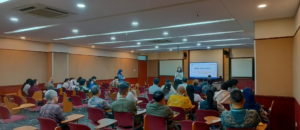
The event began with participant registration from 1:30 p.m. to 1:50 p.m. WIB. The program was then officially opened by the master of ceremonies (MC) at 1:50 p.m., followed by a welcoming address from Ms. Yenli Megawati. After the opening session, the main agenda featured a presentation by Prof. Dr. Christantius Dwiatmadja, S.E., M.E., Ph.D., from 2:00 p.m. to 3:00 p.m. This session provided participants with an opportunity to deepen their understanding of the role of lecturers in responding to changes in higher education and developments in the industrial sector in the digital era.
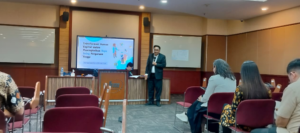
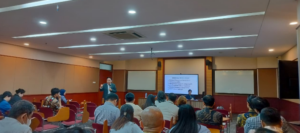
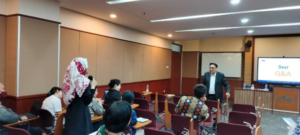
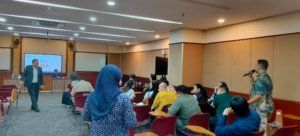
Following the presentation, the event continued with a discussion and question-and-answer session moderated by the MC from 3:00 p.m. to 3:30 p.m. This session provided participants with a platform to exchange perspectives, raise questions, and discuss the challenges and opportunities lecturers face in developing learning experiences that align with contemporary needs.
The seminar and workshop concluded with the presentation of a certificate to the speaker by Ms. Yenli Megawati, followed by a group photograph and the completion of attendance records and participant feedback forms from 3:30 p.m. to 4:00 p.m. WIB. After all activities had concluded, preparations were made for a dinner with the speaker and the UBM team.
Through this seminar and workshop, the Faculty of Social Sciences and Humanities aims to continue fostering lecturers’ professional development so that they become increasingly adaptive, innovative, and responsive to change. Understanding digital transformation is expected to extend beyond the conceptual level and be translated into practical applications in teaching and learning, research, and community service. Therefore, this seminar and workshop represents one of the faculty’s efforts to strengthen the role of lecturers in supporting higher education that remains relevant to developments in digital industries and the economy, while preparing graduates with the competencies, competitiveness, and adaptability needed to meet future challenges.