



Informatics Study Program Lecturer Workshop “Research and Teaching Synergy: Building a Sustainable and Competitive Deep Learning Research Roadmap in the Generative AI Era”

The Faculty of Technology and Design1 held an online Lecturer Workshop on Friday, May 8, 2026, from 09.00 to 11.00 WIB. This activity presented a resource person from the Sepuluh Nopember Institute of Technology (ITS), Surabaya, namely Hadziq Fabroyir, S.Kom., Ph.D as Head of the ITS Informatics Engineering Study Program. Raising the topic “Research and Teaching Synergy: Building a Sustainable and Competitive Deep Learning Research Roadmap in the Generative AI Era”, this activity became a forum for discussion on the use of Generative AI technology in supporting research and learning processes, especially in the fields of Machine Learning and Deep Learning.



In his presentation, Hadziq Fabroyir, S.Kom., Ph.D shared various practices of implementing Generative AI to assist academic and research activities, ranging from exploring research ideas, compiling datasets, utilizing AI-assisted coding, analyzing machine learning models, to developing more interactive and adaptive learning materials. In addition, participants also gained insight into how generative AI technology can be utilized effectively to increase research productivity without neglecting aspects of academic ethics and scientific quality. This activity also discussed the challenges and opportunities of using Generative AI in higher education environments, including lecturers’ strategies in integrating AI technology into the learning process so that students are better prepared to face developments in the digital industry and modern research ecosystems.
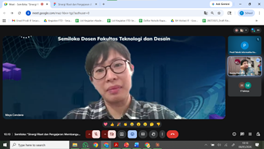

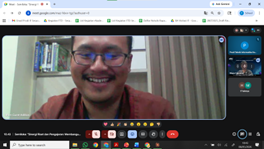
The workshop was moderated by Dr. Hery Heryanto, S.Kom., M.Kom., who led the interactive discussion. The participants’ enthusiasm was evident in the various questions and discussions regarding the application of generative AI in research development, optimization of machine learning, and opportunities for AI-based research collaboration. Through this activity, FTD1 hopes that lecturers can gain practical and strategic insights in utilizing Generative AI to support academic activities, while also encouraging the creation of an innovative, adaptive, and competitive research and learning culture in the era of digital transformation.