
Bunda Mulia University Holds Public Lecture “Potential Research for Geo-Hydrometeorology Based on AI”
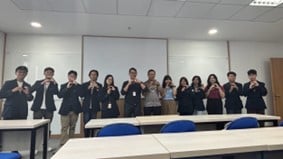
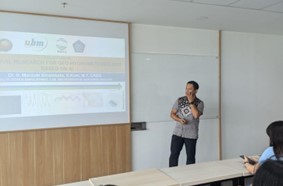
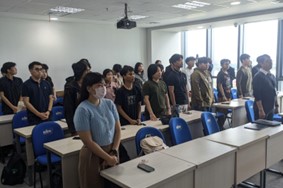
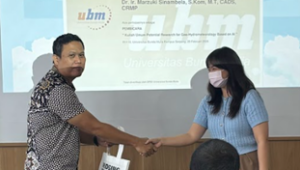
Tangerang, February 20, 2026 – Bunda Mulia University (UBM) Serpong Campus through the Data Science Student Association successfully held a public lecture entitled “Potential Research for Geo-Hydrometeorology Based on AI” on Friday, February 20, 2026. This activity presented an expert speaker in the field of Geo-Hydrometeorology and Artificial Intelligence, Dr. Ir. Markus Simanjuntak, S.Kom., MT, CADS., CRMP , who is currently active as a researcher at BMKG and has a track record of extensive international research and publications in the fields of AI, machine learning, and geomodeling. This public lecture was motivated by the increasing need for technology-based analysis in dealing with natural phenomena such as floods, landslides, droughts, and extreme weather. Geo-Hydrometeorology as an interdisciplinary field requires a large-scale data analysis approach that is able to provide accurate predictions and support disaster mitigation. The development of Artificial Intelligence (AI), especially Machine Learning and Deep Learning, opens up great opportunities in modeling and predicting these phenomena. This public lecture was held collaboratively with students from the Data Science, Artificial Intelligence, Information Systems, and Informatics Study Programs. Through this public lecture, Bunda Mulia University aims to provide a contextual understanding of the role of Artificial Intelligence (AI) in the field of Geo-Hydrometeorology, broaden students’ horizons regarding the research potential and application of AI in disaster modeling and mitigation, and encourage student interest and involvement in real-world solution-based research oriented towards environmental sustainability and disaster risk reduction in the future. This activity received a very positive response and demonstrated that the event was well-implemented. Students not only gained theoretical understanding but also practical insights into research opportunities, predictive model development, and potential cross-disciplinary collaborations relevant to the needs of industry and government agencies. The participants’ enthusiasm and appreciation for the quality of the material and the competence of the speakers reflected that this activity was successful in increasing learning motivation, fostering research interest, and strengthening students’ readiness to face the challenges of developing data-based technology in the future.